
Rental Reimbursement Coverage — New York
Free to compare
The Two-Car Rental Coverage Question
You insure two vehicles on one policy. One car goes into the shop after an accident. The other sits in your driveway. Your carrier offers to reimburse a rental, but you already have a second car. The rental reimbursement line item on your renewal notice suddenly feels like paying for something you will never use.
The structural reality is more complex than it appears. Rental reimbursement exists to replace transportation capacity, not vehicles. When your household depends on two cars to function—two commutes, two sets of errands, two drivers with conflicting schedules—losing one car cuts your transportation capacity in half even when the second vehicle remains available. The coverage decision hinges on whether your household can absorb that capacity loss or whether you need both cars operational simultaneously.
“Rental reimbursement reimburses per incident, not per vehicle—one car in the shop triggers the benefit regardless of how many others you own.”
Meet New York's Requirements Without Overpaying
Get My New York Car Insurance Quote$25,000 / $50,000 / $10,000
New York Minimum Liability Limits
New York requires $25,000 bodily injury per person, $50,000 per accident, and $10,000 property damage. Rental reimbursement is optional and sits outside these mandatory minimums, making it a pure household-fit decision rather than a compliance requirement.
New York State Department of Motor Vehicles
When the Second Car Does Not Replace the First
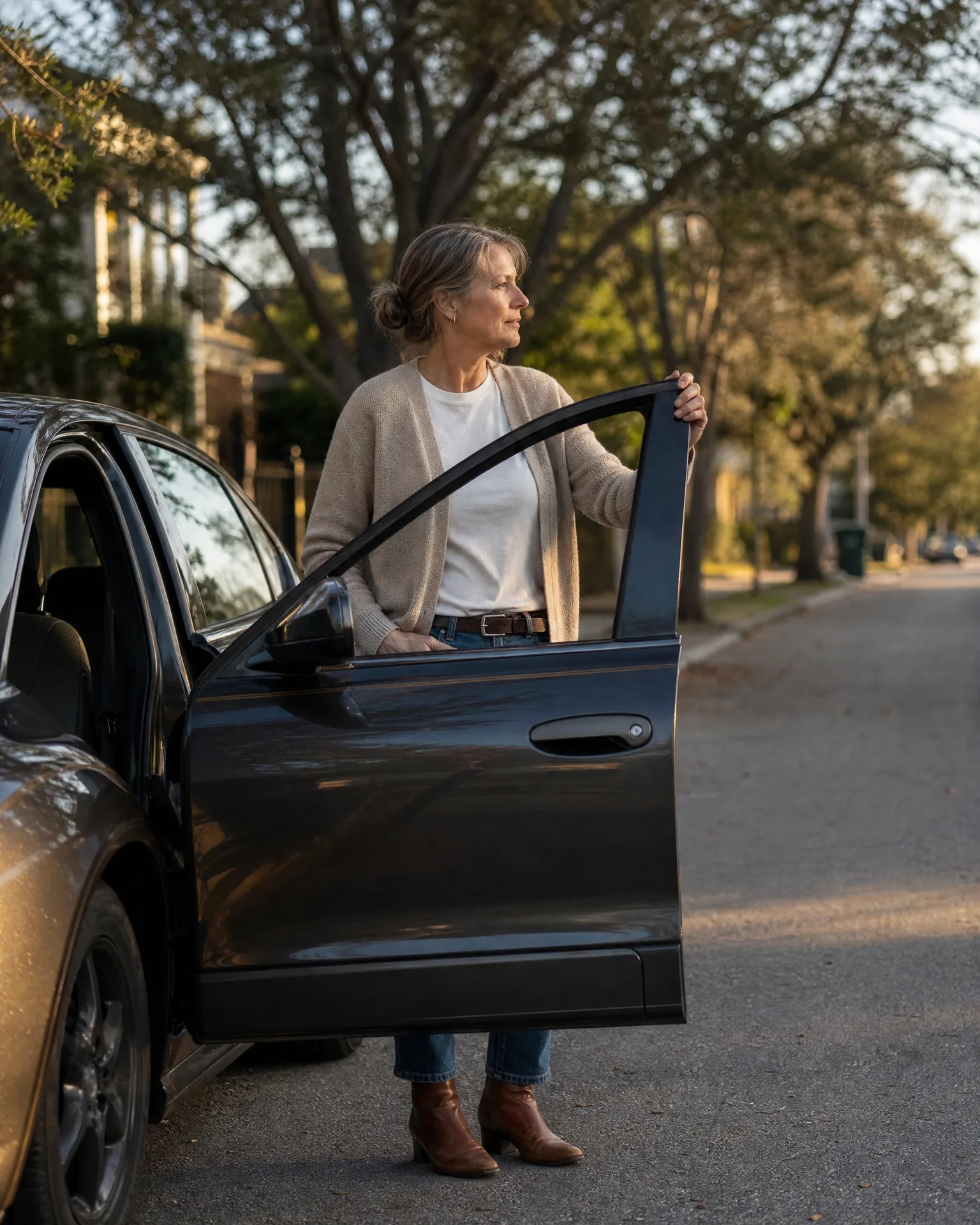
The backup-car assumption breaks down the moment both vehicles serve distinct, non-interchangeable roles. One spouse commutes 40 miles to work; the other drives local errands and school pickup. The commuter's car goes into the shop. The errand vehicle cannot cover the commute without abandoning the school run. The household now needs a rental despite owning two cars.
Simultaneous repairs surface the same structural gap. Both cars need service at once—one for accident damage, one for scheduled maintenance that cannot wait.
Seasonal use patterns create a third failure mode. A household keeps one vehicle garaged through winter and drives it only in warm months. The daily-use car needs two weeks of body work in January. The seasonal car remains unavailable. The second vehicle exists but does not solve the transportation problem, and rental reimbursement would have covered the gap for a fraction of the daily rental cost.

Rental reimbursement on a multi-car policy reimburses per incident, not per vehicle. One car in the shop triggers the benefit regardless of how many other cars you own.
Related Articles

Best Car Insurance Companies in New York
7/15/2026
Optional Car Insurance Worth It NY Multi-Car
7/15/2026
Collision Coverage for Multiple Vehicles NY
7/15/2026
Liability vs Full Coverage NY Multi-Car
7/15/2026
Liability vs Full Coverage for Multiple Cars NY
7/15/2026
Deductibles on Multi-Car Policies in NY
7/15/2026

The Household Transportation Capacity Test
Run a simple test before deciding. Imagine the car you drive most often goes into the shop for two weeks. Can your household function using only the second vehicle? If the answer requires one person to skip work, miss appointments, or rearrange their entire schedule, you need rental reimbursement even though you own two cars. The second vehicle provides a backup only when it can actually substitute for the first without disrupting household logistics.
Households with two working adults and conflicting schedules almost always fail this test. One person commutes east; the other works west. One car in the shop means one person loses transportation unless the household rents a replacement. The second car cannot be in two places simultaneously, and ride-sharing or public transit may not cover the gap reliably.
Households where one vehicle remains lightly used—a second car driven only on weekends, or a vehicle one spouse uses occasionally—pass the test more easily. Losing the primary car inconveniences the household but does not eliminate anyone's ability to work or meet obligations. The lightly-used vehicle absorbs the load during repairs, and rental reimbursement becomes optional rather than necessary.
12,084,675
New York Licensed Drivers
New York has over 12 million licensed drivers and 9.1 million registered vehicles, meaning many households insure multiple cars. The rental reimbursement decision scales with household vehicle count, not with the state's driver population.
FHWA Highway Statistics 2022
Comparing Per-Vehicle Premium to Out-of-Pocket Rental Cost
A household insuring two cars pays that amount twice.
The annual rental reimbursement premium pays for itself after one moderate-length repair. Households that skip the coverage and face even one extended repair period often spend more on a single rental than they would have paid in premiums over several years.
The math shifts when your household genuinely can function on one car. If the second vehicle reliably covers all transportation needs during repairs, and simultaneous service needs remain rare, the rental reimbursement premium becomes a recurring cost that buys protection you never use. Redirect that premium toward higher liability limits or lower deductibles that provide value regardless of whether you own one car or five.
Structuring Coverage Across Both Vehicles
New York requires liability coverage on every registered vehicle: $25,000 bodily injury per person, $50,000 per accident, and $10,000 property damage. Personal injury protection and uninsured motorist coverage are also mandatory. Rental reimbursement sits outside these requirements and remains optional on both vehicles.
You can structure rental reimbursement asymmetrically. Add it to the vehicle you drive daily and skip it on the car you use only occasionally. If the primary car goes into the shop, the policy reimburses your rental. If the secondary car needs service, you absorb the inconvenience without renting. This approach cuts the rental reimbursement premium in half while preserving coverage for the scenario most likely to force a rental.
Some carriers allow you to select different daily limits per vehicle. Tailoring limits per vehicle keeps premiums low while ensuring the coverage matches each car's role in your household. Confirm your carrier supports per-vehicle customization before assuming it applies to your policy.

Deciding Whether to Add Rental Reimbursement
Start by identifying whether your household can operate on one car during repairs without disrupting work, school, or other non-negotiable obligations. If the answer is no, rental reimbursement justifies the per-vehicle premium even though you own two cars. If the answer is yes, and simultaneous repairs remain unlikely, redirect the premium toward coverage that provides value regardless of how many vehicles you own.
One moderate repair without coverage often exceeds several years of premiums. Households that drive both cars daily, or that face long repair timelines due to parts availability or complex body work, benefit most from adding the coverage to both vehicles. Compare carriers that write multi-car policies in New York and confirm which rental reimbursement tiers each offers before finalizing your decision.
How Rental Reimbursement Works Across Two Vehicles
When you add rental reimbursement to a two-car policy, the carrier typically charges the premium once per vehicle rather than once per policy. Each car carries its own rental reimbursement line. The SUV sitting in your driveway does not reduce the reimbursement; the coverage pays regardless of whether you own a second vehicle.
The per-vehicle premium structure means a household insuring two cars pays roughly double the rental reimbursement cost of a single-car household. If your household can function on one car during repairs, the doubled premium buys redundant coverage. If losing either car forces a rental because both vehicles serve non-overlapping roles, the per-vehicle charge buys protection you will actually use.
Get Your Free Quote
Get My New York Car Insurance QuoteFrequently Asked Questions
Does rental reimbursement cover me if I own two cars?
Yes. Rental reimbursement reimburses rental costs when a covered vehicle becomes undrivable due to a covered loss, regardless of whether you own other vehicles. The coverage pays per incident, not per vehicle, so one car in the shop triggers the benefit even when a second car sits in your driveway.
Do I need rental coverage on both cars in a two-car household?
It depends on whether your household can function on one car during repairs. If both vehicles serve non-overlapping roles—two commutes, conflicting schedules—you need rental reimbursement on both. If one car remains lightly used and can substitute for the other, you can skip coverage on the backup vehicle and add it only to the car you drive daily.
How much does rental reimbursement cost on a two-car policy in New York?
Carriers typically charge rental reimbursement per vehicle, so a two-car policy pays roughly double the single-car premium.
Can I add rental reimbursement to one car and skip it on the other?
Yes. Most carriers allow asymmetric coverage on multi-car policies. Add rental reimbursement to the vehicle you drive most often and skip it on the car you use occasionally. This approach cuts the premium in half while preserving coverage for the scenario most likely to require a rental.
What happens if both cars need repairs at the same time?
Rental reimbursement reimburses one rental per incident. If both vehicles need service simultaneously and both carry rental coverage, the policy reimburses rentals for both, subject to each vehicle's daily and total limits. Households that skip rental coverage to save premium costs face out-of-pocket rental expenses for both cars during overlapping repairs.