
Average Car Insurance Premium — New York
Free to compare
What New York Drivers Actually Pay
You're looking at your household's auto insurance bill and wondering whether the number is reasonable. You've seen national averages online, but those figures don't account for New York's mandatory Personal Injury Protection and uninsured-motorist requirements — coverages that push the baseline higher than what drivers in liability-only states pay. When you're insuring two or more vehicles on one policy, understanding the state-specific floor matters because every car you add carries that same mandatory-coverage baseline.
New York drivers paid an average of $1,081.61 per insured vehicle annually in 2023, according to NAIC data. That figure reflects the full spectrum of coverage choices — minimum liability, full coverage with collision and comprehensive, and everything in between — across all vehicle types and driver profiles statewide. It's a benchmark, not a quote, and your household's actual premium depends on how many vehicles you insure, where you garage them, and which coverage levels you select for each car.
“Every vehicle on your New York policy carries mandatory PIP and uninsured-motorist coverage — the multi-car discount lowers cost but doesn't waive the state's no-fault floor.”

Meet New York's Requirements Without Overpaying
Get My New York Car Insurance Quote$1,081.61
NY Average Annual Expenditure Per Vehicle
This 2023 NAIC figure represents the statewide average across all coverage levels and vehicle types. Your household's multi-car premium will differ based on the number of vehicles, garaging address, driver assignments, and whether you carry minimum liability or full coverage on each car.
NAIC Auto Insurance Database Report 2023
Why New York's Baseline Sits Higher
New York mandates coverages most states leave optional. Every policy must include $25,000 per person and $50,000 per accident in bodily injury liability, $10,000 in property damage liability, $50,000 per person in Personal Injury Protection (no-fault medical coverage), and $25,000 per person in uninsured motorist bodily injury coverage. Those last two — PIP and uninsured motorist — are optional in many states, but New York requires them on every vehicle you insure.
That mandatory-coverage floor means the cheapest legal policy in New York costs more than the cheapest legal policy in a state that requires only liability. When you add a second or third vehicle to your household policy, each car carries that same PIP and uninsured-motorist baseline. The multi-car discount reduces the per-vehicle cost, but it doesn't eliminate the mandatory-coverage requirement — you're still paying for no-fault medical and uninsured-motorist protection on every car.
The state's 8.6% uninsured-motorist rate — the percentage of drivers on the road without coverage — justifies the mandatory uninsured-motorist requirement from a policy perspective, but it also means you're paying for protection against a risk other states handle differently. Understanding this structural reality helps you evaluate whether your household's premium reflects the state's rules or whether you're paying more than necessary for the coverage levels you've selected.
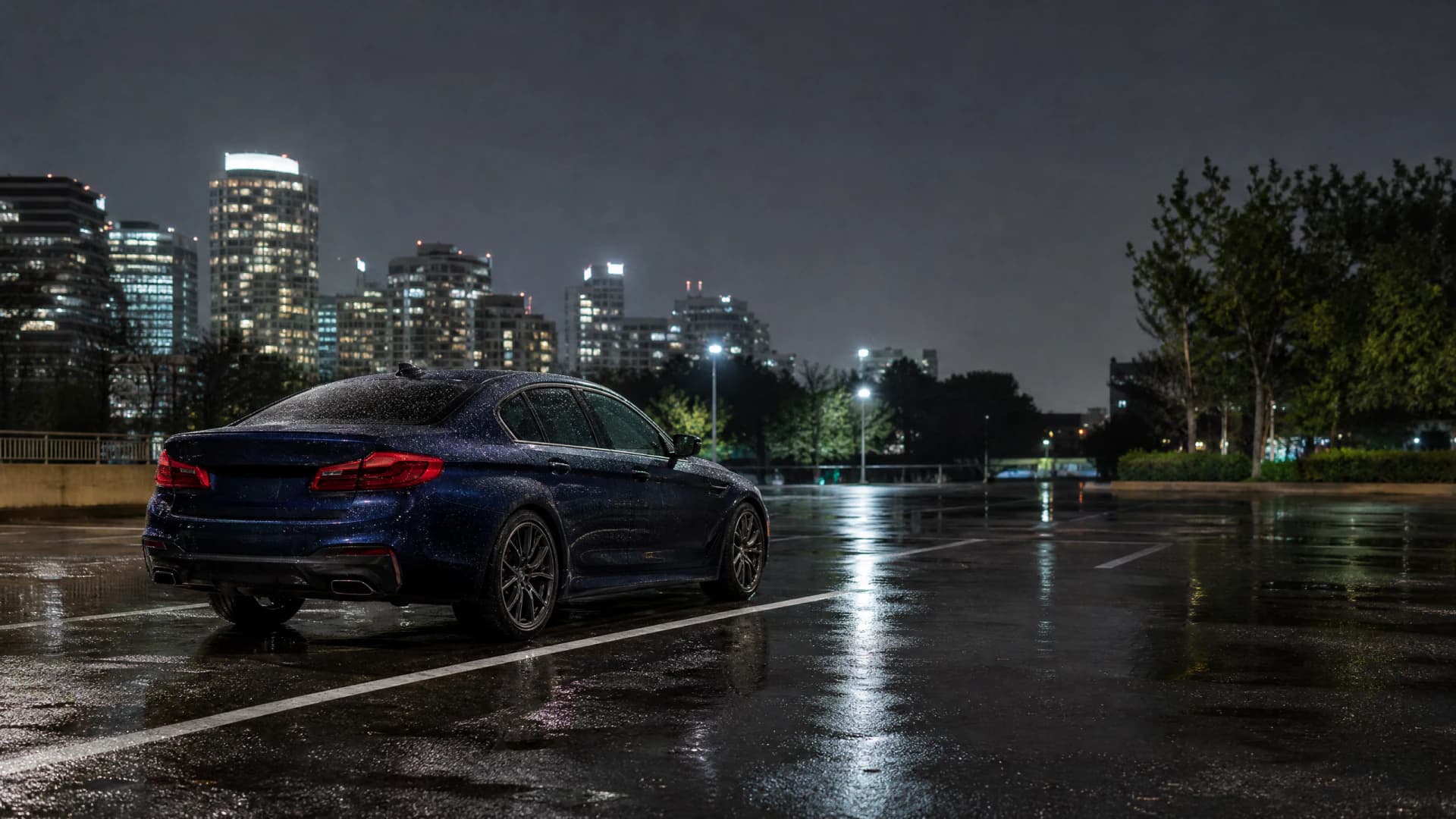
Every vehicle on your New York policy carries mandatory PIP and uninsured-motorist coverage. The multi-car discount lowers the per-vehicle cost but does not waive the state's no-fault requirements.





What Drives Household Premium Differences
New York permits carriers to use credit-based insurance scores, driving records, garaging ZIP code, annual mileage, and vehicle characteristics when setting rates. A household insuring two sedans in a suburban county with clean driving records will pay less per vehicle than a household insuring an SUV and a sports car in a high-theft urban ZIP with a speeding ticket on one driver's record. The multi-car discount reduces both households' premiums, but it doesn't erase the underlying risk factors.
Garaging address matters more than most drivers realize. New York's 156.2 motor vehicle thefts per 100,000 population in 2024 represent a statewide average, but theft rates vary sharply by county and ZIP code. A car garaged in a high-theft area costs more to insure for comprehensive coverage than the same car garaged in a low-theft suburb, even when both are on the same household policy. Carriers rate each vehicle individually based on where it's parked overnight, then apply the multi-car discount to the total.
Driver assignments also shape the per-vehicle cost. When you add a vehicle to your policy, the carrier asks which household member will be the primary driver. A car assigned to a driver with a clean record costs less than a car assigned to a driver with a recent violation, even if both cars are identical. If you have flexibility in how you assign drivers to vehicles — for example, if two household members share driving duties across three cars — the assignment you choose can shift the total premium by hundreds of dollars annually.
12,084,675
NY Licensed Drivers
New York's large driver population supports a competitive carrier market. Fifteen carriers write multi-vehicle policies statewide, and rate differences between them can exceed the value of the multi-car discount itself. Comparing quotes from multiple carriers is the most reliable way to lower your household's total premium.
FHWA 2022

Minimum Coverage Versus Full Coverage Across Multiple Vehicles
You can mix coverage levels across the vehicles on your household policy. New York requires liability, PIP, and uninsured motorist on every car, but collision and comprehensive are optional. Many households carry full coverage — liability plus collision and comprehensive — on newer or financed vehicles and drop collision and comprehensive on older cars worth less than a few thousand dollars. That approach lowers the total premium while maintaining the mandatory coverages on every vehicle.
The decision point for each car: does the annual cost of collision and comprehensive exceed the vehicle's actual cash value? Dropping those coverages and keeping only the state-mandated liability, PIP, and uninsured motorist reduces that vehicle's annual cost significantly. The multi-car discount still applies to the total policy, but you're no longer paying for coverage that exceeds the asset's value.
Compare Carriers Writing Your Household's Vehicles
Fifteen carriers write auto insurance in New York, and their rate structures differ more than their advertised discounts suggest. One carrier's base rate for a three-car household in your ZIP code may be lower than another's discounted rate, even if the second carrier advertises a larger multi-car discount percentage. The only way to identify the lowest total premium for your household is to compare quotes from multiple carriers using identical coverage levels, deductibles, and driver assignments across all vehicles.
Start by confirming your household's current coverage levels and deductibles for each vehicle. Then request quotes from at least three carriers, providing the same information to each: the year, make, and model of every car; the primary driver assigned to each; the garaging address; and the coverage levels and deductibles you want. Compare the total annual premium, not the per-vehicle breakdown, because the multi-car discount and the way each carrier structures its rates make per-vehicle comparisons misleading. The household with the lowest total cost wins, regardless of how the carrier distributes that cost across your cars.
How Multi-Car Policies Change the Math
The multi-car discount applies to the total policy premium, not to each vehicle individually. When you add a second car, the carrier re-rates the entire policy with the discount applied across both vehicles. The percentage reduction varies by carrier — some advertise larger discounts, others build the savings into a lower base rate — but the structural rule is the same: every vehicle must sit on the same policy, and in most cases they must share a garaging address, for the discount to apply. A car titled to a household member on a separate policy does not count toward your multi-car discount, even if you live at the same address.
The discount typically grows as you add vehicles. A household with three cars on one policy usually pays less per vehicle than a household with two, because the carrier spreads fixed policy costs (administrative overhead, underwriting) across more units. But adding a vehicle also re-rates the policy based on the new car's characteristics — year, make, model, safety features, theft risk — and the driver you assign to it. A third vehicle driven by a teenager or a high-performance car with comprehensive and collision coverage can increase the total premium even after the multi-car discount applies.
Get Your Free Quote
Get My New York Car Insurance QuoteFrequently Asked Questions
What is the average car insurance cost in New York for two cars?
New York drivers paid an average of $1,081.61 per insured vehicle annually in 2023. A household insuring two cars would pay roughly twice that baseline before the multi-car discount, which typically reduces the total by 10 to 25 percent depending on the carrier. Your actual cost depends on the vehicles you insure, where you garage them, and which coverage levels you select.
Does New York require the same coverage on every vehicle I insure?
New York requires liability, Personal Injury Protection, and uninsured motorist coverage on every vehicle. Collision and comprehensive are optional. You can carry full coverage on newer cars and drop collision and comprehensive on older vehicles to lower your total premium while maintaining the state-mandated coverages on all cars.
How does the multi-car discount work in New York?
The multi-car discount applies to the total policy premium when you insure two or more vehicles on the same policy. Every vehicle must sit on one policy, and most carriers require the cars to share a garaging address. The discount percentage varies by carrier, and adding a third or fourth vehicle typically increases the discount further.
Can I insure vehicles at different addresses on one New York policy?
Most New York carriers require all vehicles on a multi-car policy to share a garaging address for the multi-car discount to apply. If household members live at different addresses, you may need separate policies for the vehicles garaged at each location. Some carriers allow exceptions for college students or temporary relocations, but the standard rule ties the discount to a shared address.
Why does adding a vehicle to my policy increase the premium more than I expected?
Adding a vehicle re-rates your entire policy based on the new car's year, make, model, safety features, theft risk, and the driver you assign to it. The multi-car discount applies to the new total, but a high-performance car, a vehicle driven by a young or high-risk driver, or a car requiring comprehensive coverage in a high-theft ZIP can increase the total premium even after the discount. The per-vehicle cost may still be lower than insuring the cars separately.